
Abbreviations
D. immitis: Dirofilaria immitis
Introduction
Dirofilariasis is a zoonotic parasitic disease caused by the filarial nematode Dirofilaria immitis, commonly known as the canine heartworm. This parasite primarily infects canids, where adult worms inhabit in the pulmonary arteries and right side of the heart, leading to progressive cardiopulmonary disorders. Microfilariae produced by adult worms circulate in the host’s bloodstream and, when ingested by hematophagous mosquitoes such as Aedes, Culex, and Anopheles species, develop into infective third stage larvae. During subsequent blood feeding, infected mosquitoes transmit the parasite to new hosts [ 1 ].
In dogs, clinical manifestations vary depends on infection intensity. Cases may range from asymptomatic infections to severe disease characterized by persistent coughing, exercise intolerance, anorexia, weakness, and dyspnea. Both the mechanical presence of worms and host’s immunological responses contribute to disease pathogenesis. In humans, however, the larvae fail to mature into adults; instead, immature stages induce pulmonary dirofilariasis through inflammatory reactions to dying larvae [ 2 ].
Dogs serve as the main reservoir hosts, often harboring infections for years and producing large numbers of microfilariae. Because mosquitoes are not host specific and feed on a wide range of species, they play a crucial role in transmitting dirofilariasis to both canids and humans in endemic areas [ 3 ]. By 2014, more than 300 human pulmonary dirofilariasis cases had been reported worldwide, most from the United States, yet no confirmed human cases have been documented in Iran. This absence may be attributed to limited serological screening and the diagnostic challenge of distinguishing pulmonary nodules caused by D. immitis from those arising from other etiologies [ 4 ]. Given the importance of reservoir hosts and mosquito vectors in disease transmission, monitoring mosquito populations can provide valuable insights into the circulation of D. immitis. Therefore, the present study aims to investigate the molecular epidemiology of canine heartworm (D. immitis) in Culex pipiens mosquitoes collected from Tehran.
Results
Molecular Results
PCR amplification of the Cox1 gene using specific primers produced a 689 bp fragment. One sample was sequenced and used as the positive control. Agarose gel electrophoresis confirmed the presence of the expected 689 bp band. Lane M contained the 100 bp DNA ladder, lane 1 represents the positive control, lane 2 served as the negative control (no genomic DNA), and lanes 3–5 correspond to the tested samples, all of which produced the specific 689 bp amplicon (Figure 1).
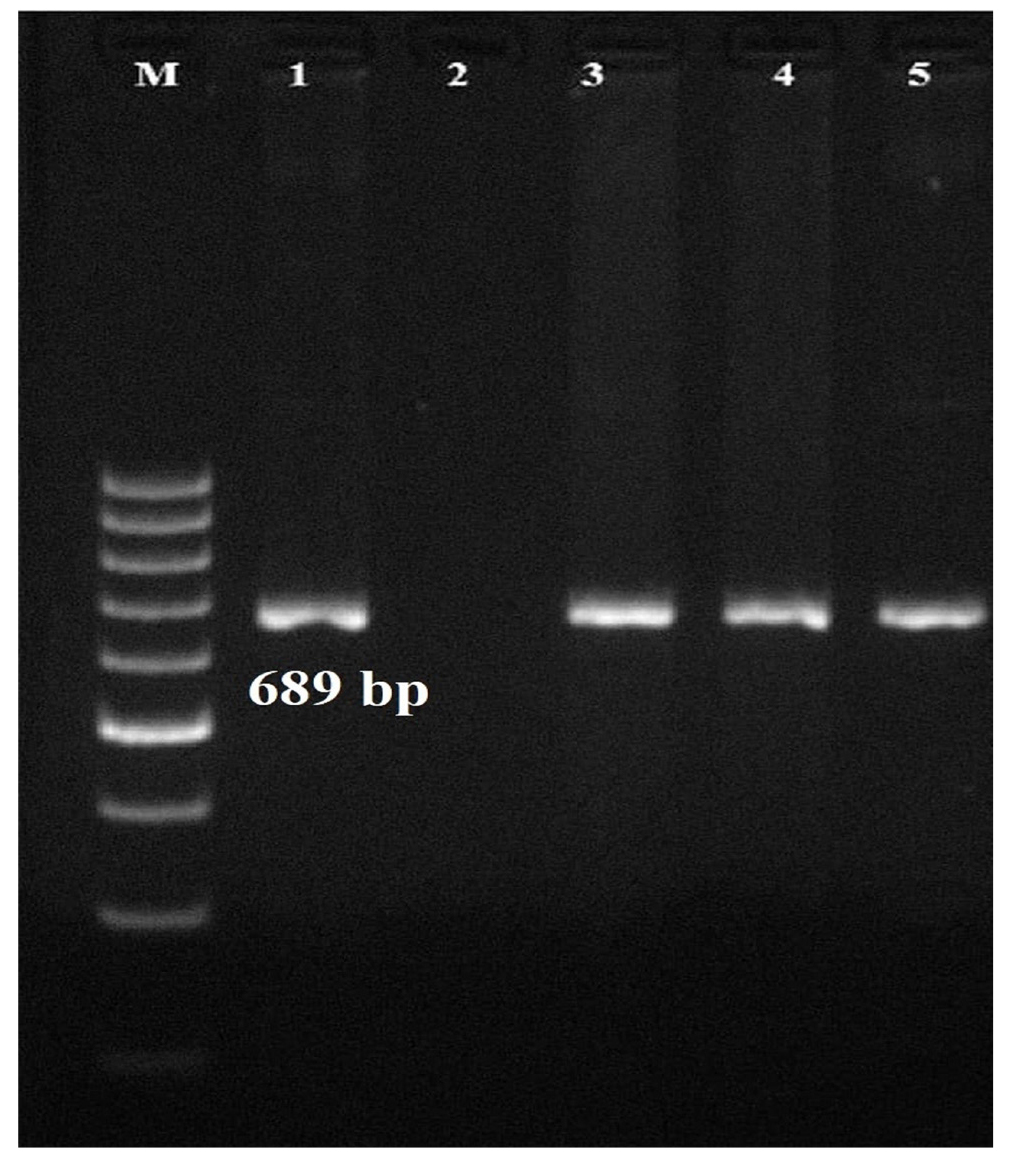
Figure 1. Agarose gel electrophoresis of PCR amplification of the Cox1 gene (689 bp) of Dirofilaria immitis. Lane M: 100 bp DNA ladder; Lane 1: positive control; Lane 2: negative control; Lanes 3–5: tested mosquito samples showing the expected 689 bp amplicon
Statistical Analysis
Of 100 Culex mosquitoes collected in this study, 15 were found to carry microfilariae of Dirofilaria immitis. This indicates that 15% of the Culex mosquitoes collected from the study areas between June and September of 2024 were vectors of this parasite (Table 1).
| Region | Mosquitoes | Number Infected | Infection Rate |
|---|---|---|---|
| Chitgar | 20 | 2 | 10% |
| Niyavaran | 20 | 3 | 15% |
| Janat abad | 20 | 4 | 20% |
| Lavasanat | 20 | 2 | 10% |
| Kouhsar | 20 | 4 | 20% |
| Total | 100 | 15 | 15% |
Discussion
The aim of the present study was to investigate the molecular epidemiology of Dirofilaria immitis in Culex pipiens mosquitoes collected from different regions of Tehran.
A comparison of historical epidemiological data over recent years shows significant changes in the global prevalence of dirofilariasis. These changes may be related to climate change and shifts in the distribution of vector populations of Dirofilaria species. Microfilariae may enter peripheral blood circulation at specific times during the day or night and hide from circulation at other times [ 6 ]. Therefore, the samples in the present study were collected during nighttime hours.
This study focused on Culex pipiens because it is the predominant mosquito species in Tehran and has been consistently been reported as a potential vector of D. immitis in Iran. Its wide distribution in both urban and rural habitats, combined with its opportunistic feeding behavior on dogs and humans, highlights its importance in the local transmission cycle. Therefore, targeting Culex pipiens not only reflects the most epidemiologically relevant vector in this region but also provides reliable insights into the risk of dirofilariasis transmission in Tehran. The transmission rate of dirofilariasis depends on the presence of infected dogs as the main reservoir hosts and the availability of competent mosquito vectors. Consequently, transmission dynamics are influenced by two factors affecting both components of the worm's life cycle: first, human behavior toward pets; second, climatic conditions that enable the presence of competent vector populations and development of Dirofilaria larvae. Similar disease manifestations have been reported in humans, including pulmonary and cardiac diseases [ 7 , 9 ]. Although serological findings indicate that the current prevalence in Tehran is lower than in other regions of Iran, it is still considered relatively high given the city’s warm and semi-arid climate. Previous studies have reported two Dirofilaria species, including D. immitis (canine heartworm) and D. repens, in several regions of Iran [ 8 ].
Azari Hamidian et al. (2009), described the COX1 sequence of third-stage larvae of D. immitis from Iranian samples.
Sharifdini et al. (2022), in a study on 334 dogs from Mazandaran and Gilan provinces, reported that 75 dogs (21.8%) were infected with D. immitis based on PCR results. In Mazandaran, infection was confirmed in 22% of dogs for D. immitis and in 4.5% Acanthocheilonema reconditum. Previous studies in this province showed infection with D. immitis in 15.2% of dogs by microscopy and 60.9% by necropsy [ 10 ].
Studies conducted by Ranjbar-Bahadori et al. (2007, 2011), reported microfilariae infection rate of 12.29% with D. immitis among stray dogs in Garmsar. Additional infection rates were recorded in Tonekabon (15%), Golestan province (18.18%), and Shiraz (9.5%). In another study, 100 herd dogs from around Mashhad were examined; microfilariae were found in 15 dogs, but none were D. immitis, and the species were identified as A. reconditum based on morphology and morphometry [ 11 , 12 ].
Borthakur et al. (2015) in northeastern India, conducted an study on stray, domestic, and working dogs using multiple diagnostic methods including modified Knott's test, fresh blood smear, ELISA, PCR, and gene sequencing. Their results showed positivity rates of 11.38% using Knott's test, 18.03% by ELISA, and 13.93% by PCR. No significant difference in infection was observed between males and females or different regions, however stray dogs were significantly more infected than other groups. ELISA revealed 22.69% occult infection in working dogs, and PCR detected D. repens in 1% of stray dogs. The ITS region of D. immitis showed high genetic homology with South Asian isolates [ 13 ].
Similarly, Nguyen et al. (2016) used Real-Time PCR in Australia to differentiate D. immitis from A. reconditum in 39 dogs positive by Knott's test [ 14 ].
In the present study, 15% of mosquito samples collected from areas populated by dogs were positive for of D. immitis microfilariae. This finding indicates that both humans and dogs living in these areas are at risk of infection.
Khamesipour et al. (2020) also reported an infection rate of 21.8% with Dirofilaria among 75 dogs in Mazandaran province, consistent with the present study [ 15 ].
Conversely, a study by Khodabakhsh et al. (2016) on 103 cats in Meshginshahr, Ardabil province, found only 1 cat (0.96%) was a carrier of the disease, which contrasts with the present study [ 16 ].
Manshoori et al. (2023) reported a 17.4% infection rate with Dirofilaria among stray dogs in Mazandaran, Gilan, and Qazvin provinces, consistent with the present study [ 17 ].
Malmasi et al. (2009) documented a 25.5% prevalence of D. immitis, in stray dogs from Mazandaran and Golestan provinces, also aligning with the present study [ 18 ]. Similarly, Khodari et al. (2014) studied 120 stray dogs in Sistan and Baluchestan, and Kerman provinces, with infection rates of 24.2% and 27.4%, respectively, consistent with the present study [ 19 ].
The positive rate of D. immitis in various provinces of Iran appear closely linked to climatic and ecological factors. The highest prevalence was recorded in Gilan (78.6%) and Mazandaran (50%) in the Caspian region, likely due to a Mediterranean temperate climate year-round. Also, in Isfahan (0.9%), Lorestan (6.9%), and Qazvin (27.3%), this parasite has been reported, possibly due to increased temperature and decreased annual rainfall. Since the first report of D. immitis infection in dogs in northern Iran, several studies have reported prevalence rates as high as 62.8%. Although data remain limited for 9 out of 31 provinces, reports of human infection with D. immitis and D. repens in Alborz and Hormozgan provinces indicate possible ongoing parasite circulation in dog populations. Additionally, wild carnivores such as wolves, jackals, and foxes play an important role in the epidemiology of dirofilariasis, therefore further epidemiological studies are necessary to fill knowledge gaps regarding wild reservoir hosts [ 20 ].
Amoung parasitological diagnostic methods, serological assays such as enzyme-linked immunosorbent assay (ELISA) and immunochromatographic tests are widely used for detecting antibodies against D. immitis. Antigen tests can help identify occult infections like a microfilaremia case, but positive dogs may have cleared infection or only been exposed without actual infection [ 21 , 22 ].
Conclusion
The results of the present study demonstrated the presence of Dirofilaria immitis microfilariae in Culex pipiens mosquitoes collected from different areas of Tehran, with an infection rate of 15%. This finding confirms the active circulation of the parasite within mosquito populations in the studied regions and highlights the role of Culex pipiens as a competent vector in the local transmission cycle. The detection of infected mosquitoes in urban areas with close human–dog interactions indicates a potential risk for both canine and human populations. Overall, the findings emphasize the epidemiological importance of mosquito-borne transmission of D. immitis in Tehran.
Declaration of Generative AI and AI-assisted technologies in the writing process
Artificial intelligence tools were used only for language editing, improving the clarity and readability of the English text, and assisting in the organization and formatting of the reference list. All scientific interpretations, data analysis, and conclusions were entirely performed by the authors.
Study Area
This study was conducted from June to September of 2024 in Tehran. The foothill regions of the city host local and indigenous dog populations, which may become infected by Culex mosquitoes in the area. Therefore, public places and veterinary clinics in Niyavaran, Lavasanat, Jannatabad, Kouhsar, and Chitgar were selected for sampling (Figure 2).
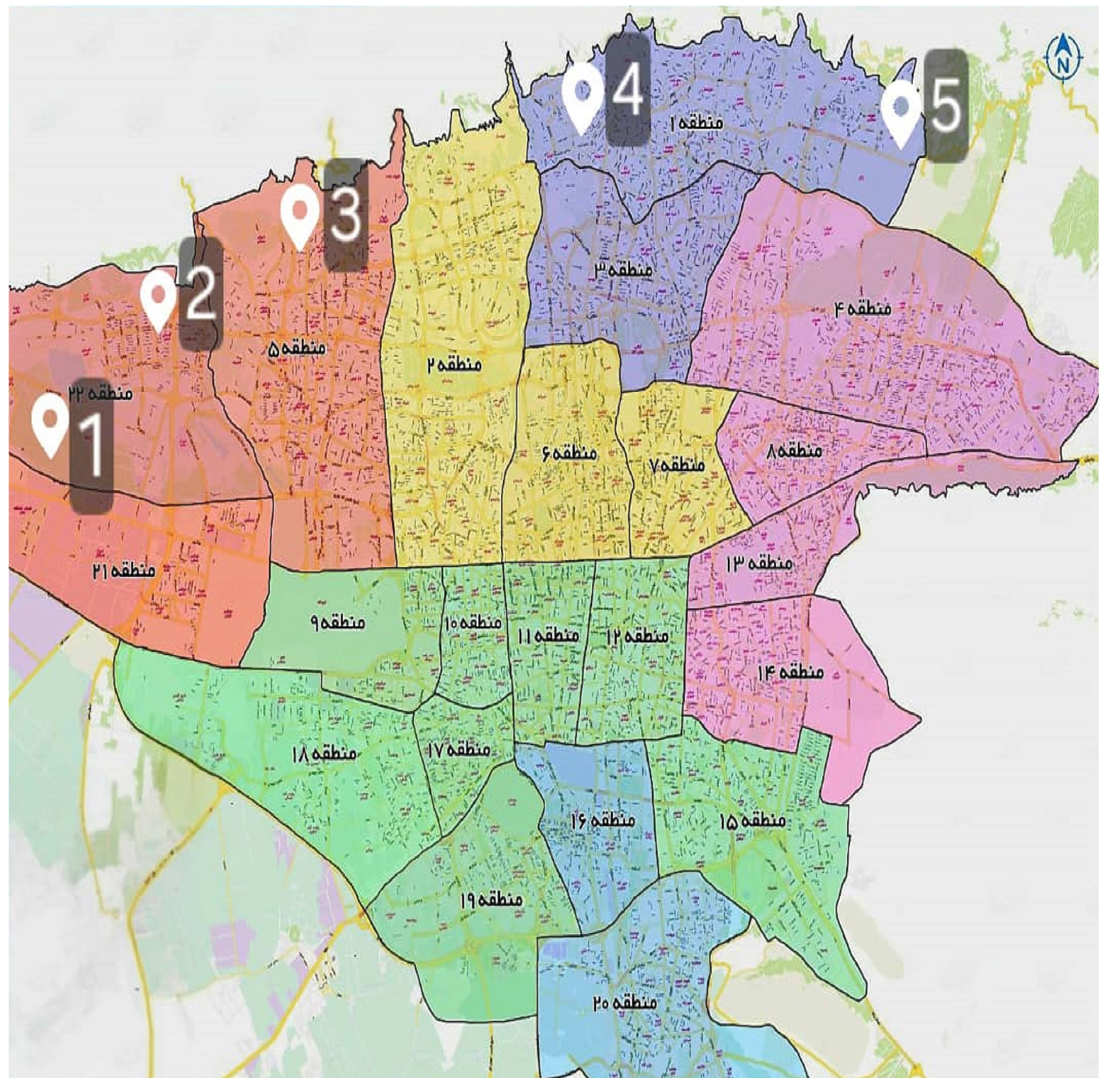
Figure 2. Map of Tehran showing the sampling locations for Culex pipiens mosquitoes, including Niyavaran, Lavasanat, Jannatabad, Kouhsar, and Chitgar districts
Sample Collection
Mosquito sampling was conducted at night using light traps and aspirators. A total of 100 Culex mosquitoes were collected from the selected locations and divided into five groups of 20 individuals each. Every mosquito was placed in a separate container and assigned a unique identification code. The five groups were stored in individual vials filled with 100% ethanol and kept in a freezer at -21 °C.
Morphological characteristics
Culex pipiens is a medium sized mosquito (3–6 mm) with a brownish body covered in mixed pale and dark scales. The proboscis is uniformly dark and unbanded, and females possess short palps. Both the legs and wings are evenly dark, with the abdomen exhibiting dark tergites with pale basal bands, while the thorax lacks distinct longitudinal stripes. This species can be distinguished from Aedes mosquitoes by the absence of leg and thoracic banding, and from Anopheles mosquitoes by the presence of short female palps and a larval siphon. Within the pipiens complex, C. pipiens differs from C. quinquefasciatus by having a longer larval siphon and by being more common in temperate climates. Its wings are uniformly dark and unmarked, unlike the white banded wings Aedes or the alternately dark and pale spotted wings of Anopheles. The plain dark wings therefore represent a key diagnostic feature of Culex pipiens (Figure 3).
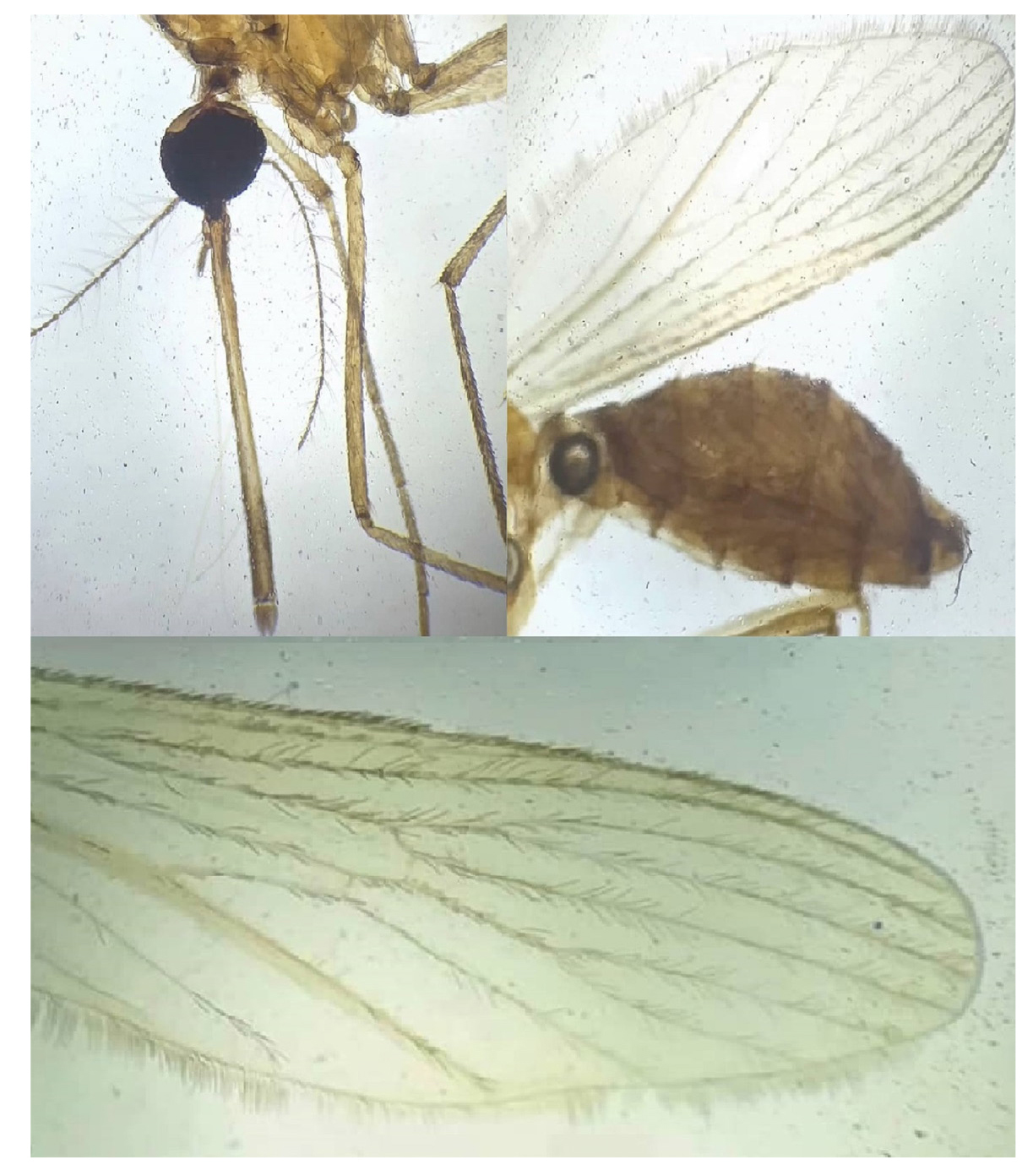
Figure 3. Morphological characteristics of Culex pipiens mosquito, including uniformly dark wings, unbanded proboscis, short female palps, and dark legs, used for species identification
DNA Extraction
Mosquito samples were removed from the -21°C freezer, and DNA extraction was carried out using the MBST DNA extraction kit (Iran) following the manufacturer's protocol. The extracted DNA samples were stored at -21°C until further use.
PCR Reaction
PCR amplification was performed using Colint-F and Colint-R primers targeting the ribosomal Cox1 gene, generating a 689 bp fragment (5) (Table 2). Each PCR reaction had a total volume was 30 µL and contained One Time PCR Buffer, 3 µL genomic DNA, 1.25 U Taq polymerase (Ampliqon, Denmark), 10 pmol of each primer (Metabion, Korea), 200 µM of each dNTP (Ampliqon, Denmark), and 1.5 mM MgCl₂.
| Reactions | Name of primer | Nucleotide sequence (5´– 3´) | PCR product |
|---|---|---|---|
| Primers | Colint-F | TGATTGGTGGTTTTGGTAA | 689 bp |
| Colint-R | ATAAGTAC GAGTATCAATATC |
PCR was performed in an automatic thermocycler (SimpliAmp, USA) under the following cycling conditions: an initial denaturation at 94°C for 5 minutes; 30 cycles of denaturation at 94°C for 30 seconds, annealing at 52°C for 45 seconds, and extension at 72°C for 60 seconds; followed by a final extension at 72°C for 7 minutes.
Negative controls without genomic DNA were included in all reactions. PCR products were resolved on a 1.5% agarose gel in 1X TBE buffer, stained with ethidium bromide, and visualized under a UV illuminator.
Statistical Analysis
The results and infection rates according to age and sex were analyzed using the Chi-square test. Data analysis was performed using SPSS software version 24 (SPSS Inc., Chicago, USA), and a significance level of p < 0.05 was considered statistically significant.
Authors' Contributions
Seyed Reza Hosseini and Marzieh Kefayat planned the experiments. Milad Hamzehali Tehrani. took the lead in writing the manuscript. All authors provided critical feedback and helped shape the research, analysis and manuscript
Acknowledgements
The authors would like to thank Ferdowsi University of Mashhad for financial support and everyone who helped us in performing this study
Conflict of interest
The authors declare that there is no conflict of the interest.
References
- Selim A, Alanazi AD, Sazmand A, Otranto D. Seroprevalence and associated risk factors for vector-borne pathogens in dogs from Egypt. Parasites Vectors. 2021;14(1):175.DOI
- Panarese R, Iatta R, Mendoza-Roldan JA, Szlosek D, Braff J, Liu J, et al. Comparison of diagnostic tools for the detection of dirofilaria immitis infection in dogs. Pathogens. 2020;9(6):499.DOI
- Martinet JP, Ferté H, Failloux AB, Schaffner F, Depaquit J. Mosquitoes of north-western Europe as potential Vectors of Arboviruses: A review. Viruses. 2019;11(11):1059.DOI
- Kampen H, Medlock JM, Vaux AG, et al. Approaches to passive mosquito surveillance in the EU. Parasites Vectors. 2015; 8:9.DOI
- Zarei Z, Kia EB, Heidari Z, Mikaeili F, Mohebali M, Sharifdini M. Age and sex distribution of Dirofilaria immitis among dogs in Meshkin-Shahr, northwest Iran, and molecular analysis of the isolates based on COX1 gene. Vet Res Forum. 2016;7(4):329–34. https://pubmed.ncbi.nlm.nih.gov/28144425/
- Rizzoli A, Bolzoni L, Chadwick EA, et al. Understanding West Nile virus ecology in Europe: Culex pipiens host feeding preference in a hotspot of virus emergence. Parasites Vectors. 2015;8:213.DOI
- Javadi S, Hanifeh M, Tavassoli M, Dalir-Naghadeh B, Khezri A, Hadian M. Dirrofilariasis in shepherd dogs of high altitude areas in West Azerbaijan-Iran. Vet Res Forum. 2011;2(1):53–7.
- Nematollahi A, Barazandeh MAJ. A survey on Dirofilaria immitis occurrence in stray dogs of Tabriz (Iran). Acta Vet Brno. 2010;79(3):449–51.DOI
- Azari-Hamidian S, Yaghoobi-Ershadi MR, Javadian E, Abai MR, Mobedi I, Linton YM, et al. Distribution and ecology of mosquitoes with a focus on dirofilariasis in northwestern Iran, with the first finding of filarial larvae in naturally infected local mosquitoes. Med Vet Entomol. 2009;23(2):111–21.DOI
- Sharifdini M, Karimi M, Ashrafi K, Soleimani M, Mirjalali H. Prevalence and molecular characterization of Dirofilaria immitis in road-killed canids of northern Iran. BMC Vet Res. 2022;18(1):161.DOI
- Ranjbar-Bahadori S, Eslami A, Bokaic S. Evaluation of different methods for diagnosis of Dirofilaria immitis. Pak J Biol Sci. 2007;10(11):1938–40.DOI
- Ranjbar-Bahadori SH, Veshgini A, Shirani D, Eslami A, Mohieddin H, Shemshadi B, et al. Epidemiological aspects of canine dirofilariasis in the north of Iran. Iran J Parasitol. 2011;6(1):73–80. https://pmc.ncbi.nlm.nih.gov/articles/PMC3279860/
- Borthakur SK, Deka DK, Islam S, Sarma DK, Sarmah PC. Prevalence and molecular epidemiological data on Dirofilaria immitis in dogs from the Northeastern States of India. Scientific World Journal. 2015;2015:265385.DOI
- Nguyen C, Koh WL, Casteriano A, BeijerinkN, GodfreyCh, BrownG, et al. Mosquito-borne heartworm Dirofilaria immitis in dogs from Australia. Parasites Vectors. 2016;9:535.DOI
- Khamesipour F, Nezaratizade S, Basirpour B, Chelgerdi Dehkordi B, Afzal SS, Kheyri P, et al. Review of Dirofilaria spp. Infection in humans and animals in Iran. Res Vet Sci Med. 2021;1:5.DOI
- Khodabakhsh M, Malmasi A, Mohebali M, Zareei Z, Kia EB, Aaarm Al. Feline dirofilariosis due to Dirofilaria immitis in Meshkin Shahr district, Northwestern Iran. Iran J Parasitol. 2016;11(2):269-273. https://ijpa.tums.ac.ir/index.php/ijpa/article/view/1070
- Manshori F, Jalousian F, Hosseini SH, Shayan P, Soltani, M. Detecting and identifying occult Dirofilariasis using a high-resolution melting real-time PCR in stray dogs. Iran J Vet Med. 2024;18(4):579–88.
- Malmasi A, Hosseini SH, Aramoon M, Bahonar A, Seifi HA. Survey of canine Dirofilaria immitis infection in Caspian provinces of Iran. Iran J Vet Res. 2011;12(4):340–4.DOI
- Khedri J, Radfar MH, Borji H, Azizzadeh M, Akhtardanesh B. Canine Heartworm in Southeastern Iran with Review of disease distribution. Iran J Parasitol. 2014;9(4):560–7.
- Solgi R, Sadjjadi S M, Mohebali M, Zarei Z, Golkar M, Raz A. Development of New Recombinant DgK Antigen for Diagnosis of Dirofilaria immitis Infections in Dogs Using ELISA Technique and Its Comparison to Molecular Methods. Iran Biomed J. 2018;22(4):283–9.DOI
- Liu J, Song KH, Lee SE, Hayasaki M, You MJ, Kim DH. Serological and molecular survey of Dirofilaria immitis infection in stray cats in Gyunggi province, South Korea. Vet Parasitol. 2005;130(1-2):125–9.DOI
- Zeller H, Marrama L, Sudre B, Van Bortel W, Warns-Petit E. Mosquito-borne disease surveillance by the European centre for disease prevention and control. Clin Microbiol Infect. 2013;19(8):693–8.DOI


