
Abbreviations
OPG: Oocyst per gram
PCR : polymerase chain reaction
Introduction
Coccidiosis is one of the most common worldwide gastrointestinal disease affecting ruminants and poultry [ 1 ]. Coccidiosis caused by Eimeria spp. is a high-morbidity parasitic disease affecting various animal species, including sheep and goats [ 2 ]. Eimeria spp. Infections may result in either acute or chronic intestinal disorders in small ruminants and are responsible for significant economic losses worldwide [ 3 ].
Eimeria spp. is host-specific, which means an Eimeria species that infects goats does not infect sheep, and vice versa [ 4 ]. Many species of Eimeria have been identified in sheep and goats.
Among these species, three species of E. ovinoidalis, E. ahsata, and E. crandalis are known as pathogenic species in sheep, and four species of E. caprina, E. ninakohlyakimovi, E. christenseni, and Eimeria arloingi are known as pathogenic species in goats [ 5 ]. Among the known pathogenic species of Eimeria in goats are E. arloingi and E. ninakohlyakimovi that are known as the dominant pathogenic species in Iran as well as many other parts of the world [ 6 ].
Environmental and climatic factors are crucial in development, survival, and transmission of coccidiosis. Eimeria oocysts can survive in the environment for extended periods, ranging from a few weeks to several months, under favorable conditions moderate temperature and adequate humidity [ 7 ].
Coccidiosis is primarily spread through the ingestion of sporulated oocysts of Eimeria spp [ 8 ]. The life cycle of Eimeria consists of three main stages: asexual reproduction (schizogony) and sexual reproduction (gametogony) within the host's body, and sporogony outside the host in the external environment [ 9 ]. The location of these stages, whether in the small or large intestine, depends on the Eimeria species involved [ 4 ].
Coccidiosis in small ruminants occurs in both clinical and subclinical forms [ 10 ]. The clinical form is associated with diarrhea and death, while the subclinical form shows weight loss and reduction in animal production both in sheep and goats [ 7 , 11 ]. Studies indicate that most domestic ruminants become infected with coccidiosis at some point during their lifetime [ 7 , 12 ], with lambs between 1 and 6 months of age being the most susceptible [ 13 ]. Adult animals generally exhibit milder clinical signs due to high immunity from repeated infections [ 4 , 14 ].
Eating colostrum in lambs on the first day of birth creates immunity against the disease for several weeks after birth [ 15 , 16 ]. Nevertheless, when animals ingest large number of sporulated oocysts, the invasive stages of Eimeria spp. can cause enteritis and diarrhea [ 4 , 17 ]. This invasion cause destruction of intestinal mucosal cells, and cell rupture and may lead to diarrhea and dehydration. Also, it may disrupt the absorption of nutrients, albumin and electrolytes, and, in severe cases anemia, hypoalbuminemia and electrolyte imbalance [ 4 ].
Coccidiosis primarily affects young and immature ruminants, and its clinical manifestation includes symptoms such as diarrhea, anorexia, poor growth, and weight loss [ 18 ]. Although hemorrhagic diarrhea due to coccidiosis is less common in lambs and kids, it is more prevalent in calves [ 4 , 19 ]. Necropsy findings in affected small ruminants may include catarrhal enteritis, bleeding, and inflammation of the mucous membranes of the small and large intestines [ 20 ]. Coccidiosis is often a self-limiting disease and sometimes improves without specific treatment [ 21 ]. Numerous drugs are prescribed to treat and prevent coccidiosis, including amprolium, sulfonamides, lasalocid, and monensin. Environmental hygiene should be observed to avoid the disease, and rotation of grazing animals is effective; drugs can also be used for prevention [ 22 , 23 ].
According to studies, Eimeria parasites' prevalence in different parts of Iran varies between 16% and 89.91 %, and infection with more than one Eimeria species has also been reported between 56% and 100% of positive samples in different herds [ 24 , 25 , 26 , 27 , 28 , 29 ]. Despite the importance of sheep and goat breeding in Khorasan province, limited studies have investigated the species composition of Eimeria species in this region. Therefore, the present study aimed to identify common morphological species of Eimeria and molecular confirmation of pathogenic species in sheep and goats in the Bajestan area.
Result
Out of 200 fecal samples collected from sheep in the study area , 139 samples were positive for Eimeria oocysts, representing a prevalence rate of 69.5%. Similarly, among the 200 fecal samples obtained from goats, 138 samples were positive, indicating a prevalence rate of 69%. The Clayton lane method was used to determine the OPG values in samples that tested positive for Eimeria oocysts. The mean OPG values (± standard deviation) recorded for sheep and goats during different months are presented in Table 1.
| Results of OPG Month | Sheep | Goat |
|---|---|---|
| Mean ± SD | Mean ± SD | |
| November | 51.45±104 | 85.46±40 |
| December | 71.07±57 | 38.83±47 |
| January | 56.65±39 | 162.45±61 |
| February | 64.23±37 | 338±304. |
| March | 13.51±12 | 131.24±81 |
Using the morphological identification keys available for Eimeria species in goats, E. christenseni (5.5%), E. elijoi (13.63%), and E. hirci (0.5%) were identified. However, due to the similarity in morphology between the three species of E.caprina, E. caprovina, and E. sefronika (46.96%), and the similarity between the two species of E.arloingi and E.jolchijovi (16.16%), it was not possible to distinguish these species from each other. Accurate identification of these species required molecular testing, as shown in Figure 1.
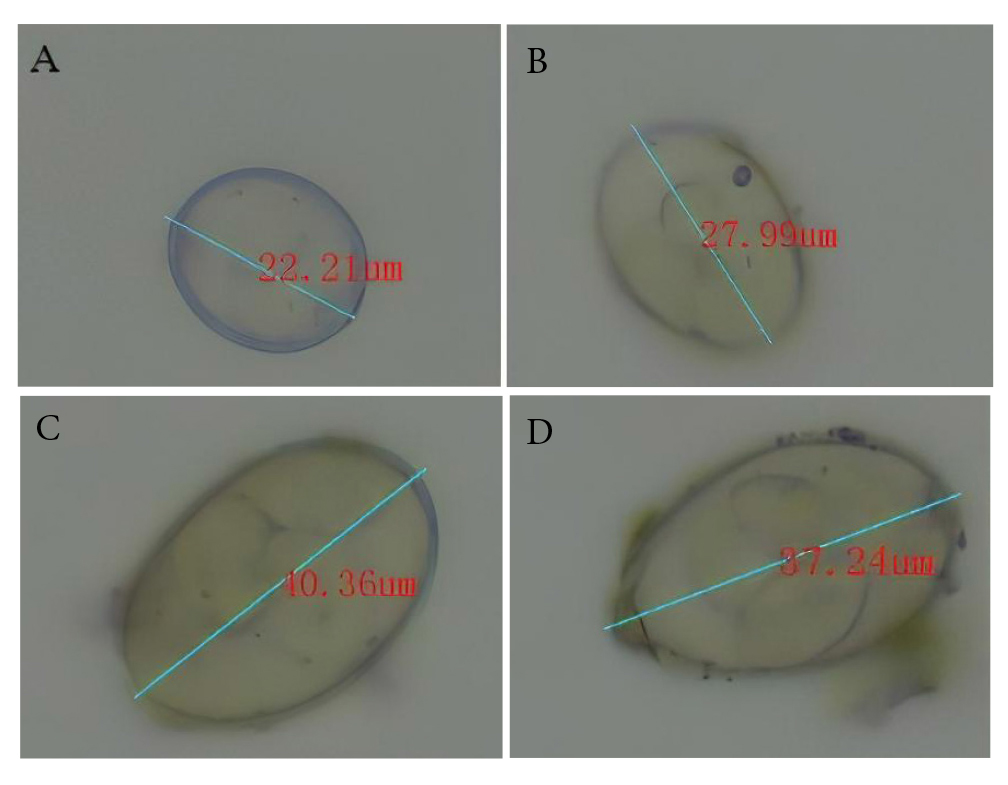
Figure 1. A: E.elijoi, B: E. arloingi or E. jolchijovi, C: E. caprina or E. sefronika, D: E.christenseni in goats.
Also, based on the observations made, two species of E.faurei (74.74%) and E. ovinoidalis (8.08%) were identified in sheep. However, due to the similarity in morphology between the species of E. ahsata, E. bacquensis, and E. granulosa (5.05%), it is not possible to definitively distinguish these species from each other through morphological methods, and accurate identification requires molecular testing as shown in (Figure 2).
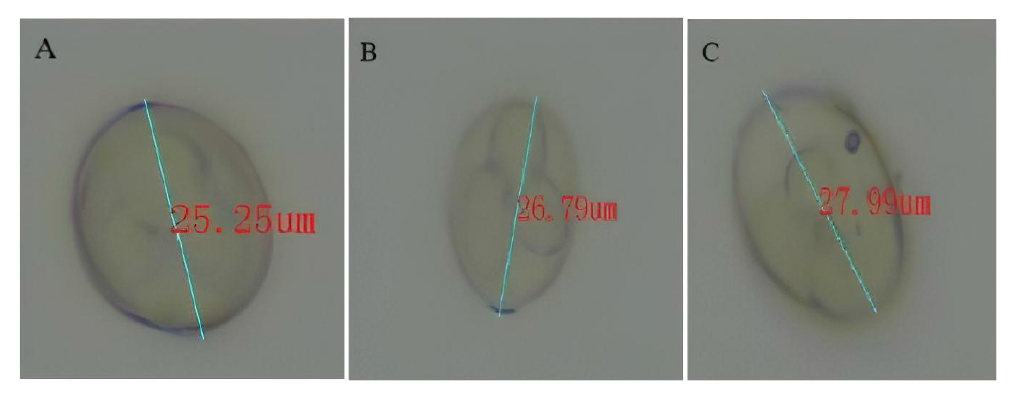
Figure 2. A: E. ahsata or E.bacquensis, B: E. faurei, C: E.ovinoidalis in sheep.
In this study, two DNA samples extracted from Eimeria oocysts collected from goats and sheep were tested by PCR along with positive and negative controls. Both sheep and goat samples showed a band slightly larger than 300 bp (Figure 3).
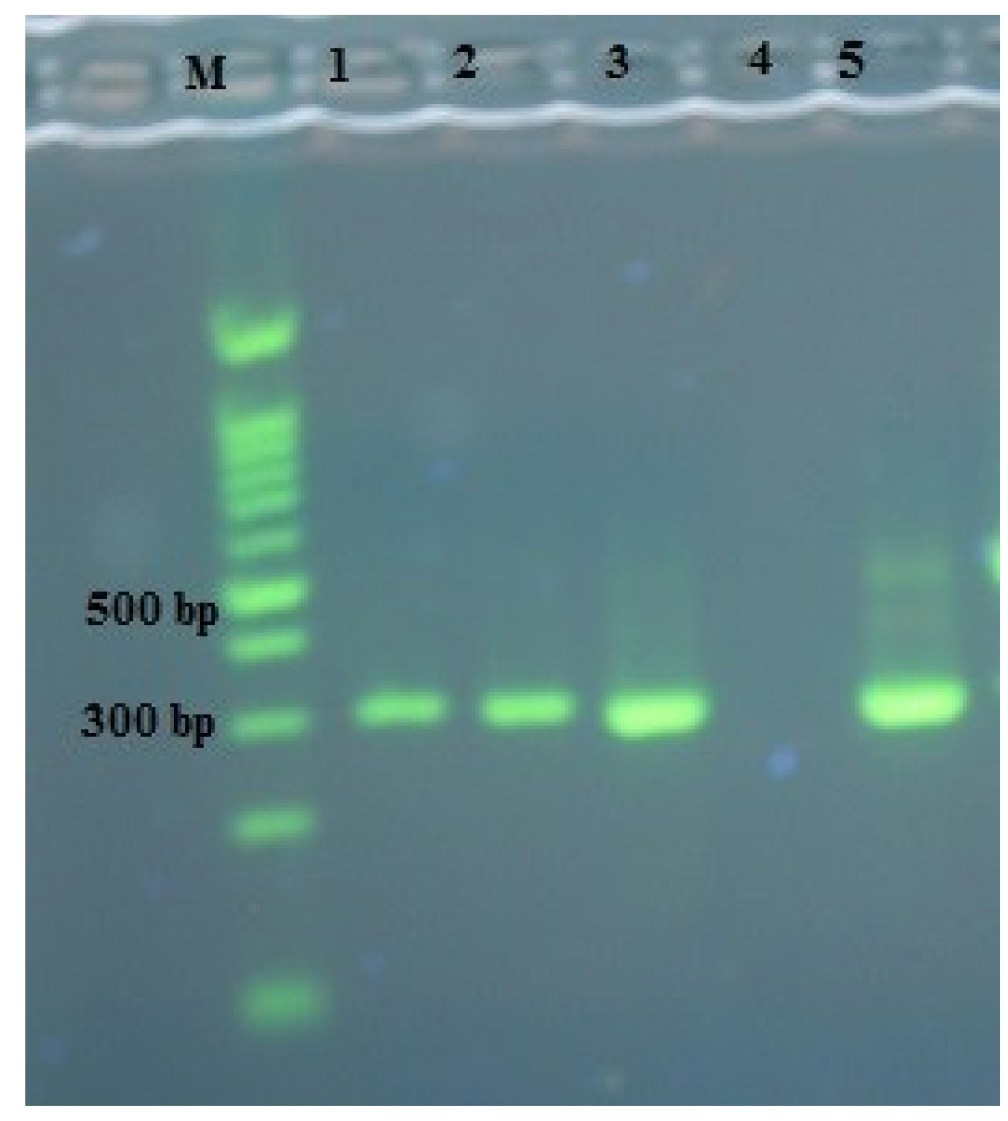
Figure 3. Electrophoresis results of PCR with special primers; M: Marker 100 bp, 1, 2: positive sample(goat), 3: positive sample(sheep), 4: negative control, 5: positive control.
Discussion
The present study revealed a prevalence of coccidiosis of 69.5% in sheep and 69% in goats in the Bajestan area w of Khorasan Razavi Province. The prevalence of coccidiosis has been reported in sheep and goats in different studies conducted in various countries and regions. The prevalence rates vary from 54% to 90.09%, depending on the location, climate, and diagnostic methods. The highest prevalence (90.09%) has been reported in China, while the lowest prevalence was recorded in Ordon [ 34 , 35 , 36 ].
In Iran, Yakhchali et al. reported a 16.7% prevalence of coccidiosis in sheep in Tabriz [ 37 ]. Nourollahifar et al. reported a 63% prevalence of coccidiosis in sheep in Rudsar [ 38 ]. Many Eimeria species have been identified in sheep and goats, some of which can cause disease. According to studies, E.ovina has the highest pathogenicity in sheep; E. ahhsata and E. crandalis are next in line, and E. faurei, has low pathogenicity [ 39 ]. In goats, E. ninakohlyakimoi and E.caprina have the highest pathogenicity, and E. arloingi has low pathogenicity [ 40 ]. In the present study, morphological examination identified E.faurei and E. ovina in sheep. However, due to the morphological similarities among E.ahhsata, E.granulosa, and E. bukidnonensis, a conclusive identification solely based on morphological characteristics was not possible.
Additionally, in goats, species such as E. elijoyi, E. christenseni, and E. hirci were identified using available morphological keys. However, the close morphological resemblance between E. arloingi and E. jolchijovi, along with similarities among E. caprina, E. caprovina, and E.espinosa, prevented an accurate diagnosis from being made using the morphological approach[ 31 ].
In research carried out by Yakhchali et al. involving sheep fecal samples from Malayer region, E. faurei was found to be the most common species among lambs younger than six months of age, and the second most common species overall after E. intracata, [ 25 ].
Vasilkova et al. identified E.elijoyi and E. arloingi as dominant species in goats following examination of various Eimeria species in sheep and goats [ 41 ]. In this study, the highest prevalence in sheep was related to E. faurei, and in goats was related to one of E. caprina, E.caprovina, or E. espheronica.
Interestingly, E. ovinoidea frequently reported as a dominant species in sheep in many studies, was reported with low prevalence in this study. In goats, E. ninakohlyakimoi was reported with high prevalence in various studies, but was not identified in this study. The OPG level recorded in this study did not follow a specific pattern during different months and fluctuated during different months. According to studies, the OPG level observed in sheep and goats in Bajestan were lower compared to those reported in other regions of Iran and the worldwide. Standard methods for identifying different Eimeria species, including morphological and histological approaches, are time-consuming and often lack sufficient sensitivity. Overlapping morphological characteristics between Eimeria species further complicate accurate identification. Therefore, the development and evolution of molecular diagnostics for identifying and determining the characteristics of parasites have been very helpful [ 42 ].
The 18S rRNA gene has been used as a molecular target to distinguish closely related Eimeria species and for conducting phylogenetic analyses. Amplification of fragments ranging between 384 and 546 bp has been effectively amplified using primer sets targeting the 3' end of the 18S rRNA gene and the 5' end of the 5.8S rRNA gene within the ITS-1 regions of the Eimaria genus [ 32 ]. In the present study, PCR results confirmed the presence of Eimeria spp in fecal samples in sheep and goats. however, sequencing of the PCR samples yielded low quality results, which prevented the identification of the dominant species of sheep and goats in the Bajestan area. Consequently, it is essential to gather a larger number of representative samples of various Eimeria species from sheep and goats; sequencing these samples can facilitate phylogenetic analysis and precise identification of morphologically similar Eimeria species.
In conclusion, the present study identified E. faurei and E. ovinoidalis as the predominant species in sheep and E. elijoyi, E. christenseni, and E. hirci in goats based on morphological examination. Although, PCR amplification of ITS1 region was successfully performed for positive samples, sequencing samples had low quality and results were insufficient for phylogenetic analysis.
Declaration of Generative AI and AI-assisted technologies in the writing process
To reduce noise and preserve fine details in microscopic images, AI-based image enhancement methods were employed."
Sampling
This study was conducted from September 2021 to June 2022, and fecal samples of sheep and goats were collected to determine the frequency of Eimeria spp infection and identify Eimeria species in Bajestan, Khorasan Razavi province, Iran.
The sample size was calculated based on a previously reported prevalence rate of 20% in Zabol area [ 28 , 29 ]. Accordingly, 200 fecal samples per animal were collected. Each month, fecal samples of 40 sheep and 40 goats were collected directly from the rectum in special containers and transferred to the parasitology laboratory of the Faculty of Veterinary Medicine at Ferdowsi University of Mashhad.
Microscopic examination
The fecal samples were examined by the Willis method [ 30 ]. Samples that tested positive were separated and preserved for further testing. Oocysts per gram (OPG) were determined quantitatively by the Clayton Lane method [ 30 ]. After examination, oocysts were purified and transferred into 2.5% (w/v) potassium dichromate solution to allow sporulated at room temperature [ 30 ]. Species identification was performed based on oocyst size and morphology (shape, color, form index, presence or absence of micropyle and its cap, presence or absence of residual, polar, and Stieda bodies of the oocysts and sporocysts). One hundred sporulated oocysts were identified using the available morphological keys [ 30 , 31 ]. The size of Eimeria oocysts was determined using a digital microscope.
DNA extraction and PCR test
Positive Samples were isolated, examined under light microscope, and preserved for molecular detection. DNA was extracted from the fecal samples using Genomic DNA Purification kit (denazist Co, Mashhad) following the manufacturer's instructions. DNA samples were kept at −20 °C until processed for PCR assay.
The ITS-1 region of Eimeria spp. from each positive sample was amplified using PCR and the cycling conditions and primer sequences of the forward and reverse primers were as follows:
- Forward: 5'-GCAAAAGTCGTAACACGGTTTCC-3',
- Reverse: 5'CTGCAATTCACAATGCGTATCG-3
Cycling conditions were: initial denaturation at 94'C for 5 min followed by 35 cycles of 94°C for 45 s, 65°C for 1 min and 72°C for 1 min, this was followed by a final extension at 72°C for 7 min. The amplification products from ITS-1 rRNA were separated on a 1.8% agarose gel containing 1 µl/mL of green viewer for 40–60 min, and then imaged. From the PCR products, one positive sample from sheep, and one from goat were selected and sent for sequencing [ 32 , 33 ].
Sequencing
PCR positive samples using the primers were submitted for sequencing to a company in Iran (Topaz- Genekaush Co, Karaj, Iran). The submitted samples were sequenced using the MEGA-4 software, and after performing a blast, the sequenced samples from sheep and goats did not match any of the registered samples in the gene bank.
Statistical analysis
The prevalence of Eimeria spp infection in sheep and goats was calculated by SPSS software version 22(IBM company.USA)
Authors' Contributions
Conceptualization: G.R.R., Methodology: M.A., A.K, Investigation: M.A, A.K, G.R.R, Writing - original draft preparation: M.A., A.K., Writing - review and editing: G.R., Funding acquisition: G.R.R., Supervision: G.R.R.
Acknowledgements
The authors thank Mr Hamid Eshrati for his assistance with the laboratory examination. This study was supported by grant No 3/57226 from the Vice President of Research and Technology of Ferdowsi University of Mashhad, Iran.
Competing Interests
The authors declare that there is no conflict of interest.
References
- Ashfaq K, Asghar AY, Hashmi SS, Abbas A. Bovine Cocvidiosis: A formidable challenge to cattle industry. Int J Res Adv Agric Sci. 2023;2(2):34–42.
- Hafeez MA, Sattar A, Khalid K, Khalid AR, Mahmood MS, Aleem MT, et al. Molecular and morphological characterization of Eimeria crandallis isolated from deer (Cervidae) in different captive animals. Life. 2022;12(10):1621.DOI
- de Macedo LO, Bezerra-Santos MA, de Mendonça CL, Alves LC, Ramos RAN, de Carvalho GA. Prevalence and risk factors associated with infection by Eimeria spp. in goats and sheep in Northeastern Brazil. J Parasit Dis. 2020;44(3):607–12.DOI
- Bangoura B, Bardsley KD. Ruminant coccidiosis. Vet Clin Food Anim Pract. 2020;36(1):187–203.
- Shaheed HA, Al-Aziz SA. Eimeriosis is small ruminants in Basrah province/southern Iraq. One Heal Triad. 2023; 3:60–68.DOI
- Soe AK. Coccidia (Protozoa: Apicomplexa) of the domesticated goat Capra hircus in New Zealand: a thesis presented in partial fulfilment of the requirements for the degree of Master of Philosophy in veterinary science at Massey University. Massey University, 1989.
- Bangoura B, Bhuiya MAI, Kilpatrick M. Eimeria infections in domestic and wild ruminants with reference to control options in domestic ruminants. Parasitol Res. 2022;121(8):2207–32.DOI
- Zhang K, Liang G, Lang J, Qin Z, Zhang Y, Wang Y, et al. Eimeria spp. (Eimeriidae) in the migratory whooper swan (Cygnus cygnus) Linnaeus, 1758 (Anatidae) from Sanmenxia Swan Lake National Urban Wetland Park in the middle reaches of the Yellow River in China. Parasitol Res. 2022;121(10):2967–77.DOI
- Pandian TJ. Evolution and speciation in Protozoa. CRC Press; 2023.DOI
- Elazazy OM. Eimeria species infection in small ruminants in Kuwait. Egypt Vet Med Soc Parasitol J. 2023;19(1):36–42.DOI
- Mohamed HI, Arafa WM, El-Dakhly KM. Ovine coccidiosis and associated risk factors in Minya, Egypt. Beni-Suef Univ J Basic Appl Sci. 2022;11(1):137.DOI
- Hatam-Nahavandi K, Carmena D, Rezaeian M, Mirjalali H, Rahimi HM, Badri M, et al. Gastrointestinal parasites of domestic mammalian hosts in Southeastern Iran. Vet Sci. 2023;10(4):261.DOI
- Barre A, Hirabe AM, Mohamed AA, Ibrahim AA, Mohamed HE, Adan MA, et al. Prevalence, public health and associated risk factors of coccidiosis in small ruminants at Deyniile sub-district in Mogadishu, Somalia. J Vet Med Anim Sci. 2023;6(1):1–6.
- Sule IF, Kingsley DG, Adamu NM. Prevalence of coccidia in sheep at the Bauchi Abattoir, Inkil, Bauchi state. Int J Zool Appl Biosci. 2021;6(6):288–92.
- van Rooyen J. The principles of good lamb survival. Stockfarm. 2022;12(2):50–1.
- van Wyngaard J. Caring for lambs. Farmer's Weekly. 2021;2021(21030):40–2.
- Ashraf A, Shahardar RA, Bulbul KH, Wani ZA, Allaie IM, Mir AQ. Efficacy of amprolium against goats in central Kashmir. J Entomol Zool Stud. 2020;8(3):1667–70.DOI
- Kaur S, Singla LD, Sandhu BS, Bal MS, Kaur P. Coccidiosis in goats: pathological observations on intestinal developmental stages and anticoccidial efficacy of amprolim. Indian J Anim Res. 2019;53(2):245–9.
- Durgut MK, Ok M. Evaluation of Some Intestinal Biomarkers in the Determination of Intestinal Damage in Calves with Coccidiosis. Trop Anim Sci J. 2023;46(2):221–30.DOI
- Van Metre DC, Tyler JW, Stehman SM. Diagnosis of enteric disease in small ruminants. Vet Clin North Am Food Anim Pract. 2000;16(1):87–115.DOI
- Adolph C. Coccidia. Clin Small Anim Intern Med. 2020;1023–7.DOI
- Noack S, Chapman HD, Selzer PM. Anticoccidial drugs of the livestock industry. Parasitol Res. 2019;118(7):2009–26.DOI
- Constable PD, Hinchcliff KW, Done SH, Gruenberg W. A textbook of the diseases of cattle, horses, sheep, pigs, and goats. Vet Med. 2017; pp:2045.
- Hashemnia M, Rezaei F, Chalechale A. Prevalence, intensity, and pathological lesions of Eimeria infection in goats in western Iran. Comp Clin Path. 2015;24(4):805–10.DOI
- Yakhchali M, Golami E. Eimeria infection (Coccidia: Eimeriidae) in sheep of different age groups in Sanandaj city, Iran. Vet Arh. 2008;78(1):57-64.
- Kheirandish R, Nourollahi-Fard SR, Yadegari Z. Prevalence and pathology of coccidiosis in goats in southeastern Iran. J Parasit Dis. 2014;38(1):27–31.DOI
- Radfar MH, Sakhaee E, Shamsaddini BM, HAJ MH. Study on gastrointestinal parasitic infection in Raeini goats. Iran J Vet Res Shiraz Univ. 2011;12(1):76–80.
- Mirzaei M, Dahmardeh E. The prevalence of Eimeria species in sheep in Zabol city, Iran. Iran Vet J. 2016;11(4):98–105.DOI
- Lwanga SK, Lemeshow S. Sample size determination in health studies. Geneva World Health Organ. 1991;1.
- E. J. L. Soulsby. Helminths, arthropods, and protozoa of domesticated animals. London: Baillière Tindall; 1982. 809 pp.
- Eckert J, Braun R, Shirley MW CP. Biotechnology: guidelines on techniques in coccidiosis research. 1st ed. Luxembourg: Office for Official Publications of the European Communities; 1995. 660 pp.
- Kawahara F, Zhang G, Mingala CN, Tamura Y, Koiwa M, Onuma M, et al. Genetic analysis and development of species-specific PCR assays based on the ITS-1 region of rRNA in bovine Eimeria parasites. Vet Parasitol. 2010;174(1–2):49–57.DOI
- Khodakaram-Tafti A, Hashemnia M, Razavi SM, Sharifiyazdi H, Nazifi S. Genetic characterization and phylogenetic analysis of Eimeria arloingi in Iranian native kids. Parasitol Res. 2013;112(9):3187–92.DOI
- Wang CR, Xiao JY, Chen AH, Chen J, Wang Y, Gao JF, et al. Prevalence of coccidial infection in sheep and goats in northeastern China. Vet Parasitol. 2010;174(3–4):213–7.DOI
- Souza LEB de, Cruz JF da, Teixeira MR, Albuquerque GR, Melo ADB, Tapia DMT. Epidemiology of Eimeria infections in sheep raised extensively in a semiarid region of Brazil. Rev. Bras. Parasitol. Veterinária. 2015;24(4):410–5.DOI
- Abo-Shehada MN, Abo-Farieha HA. Prevalence of Eimeria species among goats in northern Jordan. Small Rumin Res. 2003;49(2):109–13.DOI
- Yakhchali, M., Zarei, MR. Prevalence of Eimeria infection in sheep of Tabriz suburb, Iran. Iran J Vet Res. 2008;9(3):277–80.
- Nourollahi-Fard SR, Khedri J, Ghashghaei O, Mohammadyari N, Sharifi H. The prevalence of ovine Eimeria infection in Rudsar, North of Iran, (2011–2012). J Parasit Dis [Internet]. 2016;40(3):954–7.DOI
- J. P. Dubey. Coccidiosis in Livestock, Poultry, Companion Animals, and Humans. 1st ed. Boca Raton: CRC Press; 2019. 394 pp.
- Yakhchali M, Rezaei AA. The prevalence and intensity of Eimeria spp. infection in sheep of Malayer suburb, Iran. Arch Razi Inst. 2010;65(1):27–32.
- Vasilková Z, Krupicer I, Legáth J, Kovalkovičová N, Peťko B. Coccidiosis of small ruminants in various regions of Slovakia. Acta Parasitol. 2004 Dec 1; 49:272–5.
- Al-Habsi K, Yang R, Ryan U, Miller DW, Jacobson C. Morphological and molecular characterization of three Eimeria species from captured rangeland goats in Western Australia. Vet Parasitol Reg Stud Reports. 2017; 9:75–83.DOI


